
Major Edward Havelock Oliphant
Born 28th April 1873, Edward was the son of George and Mary Oliphant and the brother of William and Frank. Having left Dulwich in 1884, he went to United Services College, St Mark’s, Windsor before moving on to Sandhurst.
After receiving his commission he was posted to the 1st battalion Devonshire Regiment which had been stationed in India since January 1893.
While serving with the 1st battalion he was promoted to the rank of Lieutenant with the Devonshire Regiment on 22nd September, 1896.
He served with the 1st battalion Devonshire Regiment during the Pathan rising of 1897, earning the India Medal 1895 clasp Punjab Frontier 1897-98.
Retaining the rank of Lieutenant and seniority as a Lieutenant he transferred to the Indian Army on 6th July, 1898.
On the 27th January 1899 he was posted to the strength of the 23rd Madras Infantry than was attached from them, on the 24 June 1899 to the 3rd Infantry, Hyderabad Contingent.
His attachment became a permanent appointment to the strength of the regiment on the 1st April 1900.
After the Indian Army reforms in 1903 was renamed the 96th Berar Infantry.
By 1915, he was serving in Bushire, Iran. With Ramadan approaching, the Tangistanis, who were Muslim, planned to attack the British before they had to fast. On 12 July a report reached Edward, who was commander of the British outposts, that enemy tribesmen had been observed three kilometres south of the outpost line. Although he did not initially believe the report, he rode out with Captain G.J.L. Ranking and 27 riflemen. Unfortunately, he and Ranking rode too far in front of their men, were surprised by the enemy and both were killed. This sacrifice notified the outposts of the imminent attack and they were able to repel it. He is buried in the Tehran War Cemetery.
When the Great War started Persia was a weakly-governed country because effective power lay in the hands of regional administrators and their war-lord allies. The Persian Army provided colour on ceremonial occasions but did not fare well when fighting the many bandits and war-lords within the country. The Persian Gendarmerie, the equivalent of an armed national police force that also collected revenue, was controlled by Swedish officers on contract appointments, and many of these Swedes supported Germany and Kaiser Wilhelm’s ambitions. Dotted around Persia in strategic locations were German political and intelligence agents who generally operated under the guise of businessmen. Once hostilities between the Great Powers commenced these German agents used gold, weapons and ammunition to create alliances with Persian tribes who were prepared to attack British interests.
By agreement with the Persian government in Tehran Britain maintained a string of posts along the telegraph line that followed the Persian Gulf northern coastline; these posts were garrisoned by detachments from units of the Indian Army. British ambitions were to preserve the integrity of Persia as an independent but compliant state whilst using it as a buffer to protect India. German long-term ambitions were to use Persia as a neutral route to Aghanistan from where, hopefully, India could be de-stabilised by Ghadarite Indian revolutionaries. Once Turkey became a German ally Jihad, or Holy War, was declared from Constantinople and the Germans used Turkish religious and social influence to inflame susceptible Persians against the British presence in their Muslim country. The hope was that Persia would ally itself with the Central Powers.
But there was one other powerful nation in the region who wished Persia to remain neutral, and also to be compliant – Britain’s ally Imperial Russia who was Persia’s northern neighbour. In 1907 Britain had signed an agreement with Russia termed the Anglo-Russian Convention. This agreement partitioned Persia into two spheres of influence and a neutral sphere. The British sphere of influence lay in the south-east (see map of Persia), the Russian sphere was the northern half of Persia, and the neutral sphere stretched across the country. Whilst both Britain and Russia argued that their Convention was designed to strengthen the integrity and independence of Persia, the Persians saw Russia’s move as being a prelude to partition. Britain’s apparent aim was to secure India from Russian territorial advances, as had occurred in Central Asia, but whatever the real British reason, the Convention was deeply unpopular amongst Persians who thenceforth regarded Britain with suspicion or enmity.
Once the Great War started Persian territory in the Russian sphere of influence was invaded by the Turks, and then fought over by Russian and Turkish armies. In July 1915, after considerable political activity, Britain and Russia intervened militarily in eastern Persia including in the neutral sphere, by creating the East Persia Cordon. Indian Army troops entered south-eastern Persia whilst Russian troops entered from across their border east of the Caspian Sea. The two allied forces linked up and attempted to prevent infiltration by the Central Powers through Persia into Afghanistan.
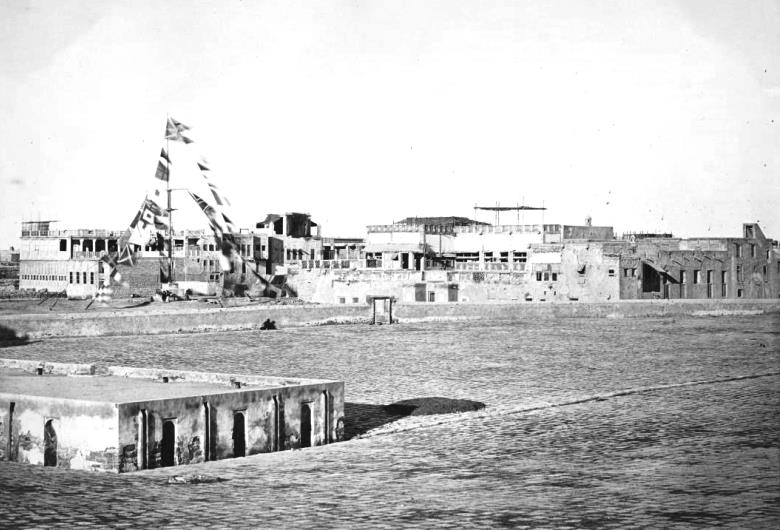
Bushire was a Persian island on the north Gulf coast, but unless there were abnormally high tides it could always be accessed by an expanse of sand called the Mashileh that acted as a causeway to the mainland. As Bushire was the principal Persian port a British political Residency and a telegraph station were located there, along with a garrison consisting of a double-company from an Indian infantry regiment. The tribal area of Tangistan was located south-east of Bushire and the Tangistanis were a ferocious and predatory people. Inflaming these tribesmen against the British was Doctor Listermann, the German consul in Bushire who had received instructions from his Legation in Tehran to cut the British telegraph cable. Listermann incited Rais Ali, the tribal Chief of Dilwar, 40 kilometres south of Bushire and also on the coast, to attack the British Residency. Rais Ali had an axe to grind as the Royal Navy had destroyed many of Dilwar’s fishing and cargo vessels in 1913 during a dispute over piracy.
The British, being aware of Listerman’s activities because of information supplied by friendly Khans or tribal chiefs, sent warships to Bushire and Dilwar, and prepared to land troops bound for Basra in Mesopotamia at Bushire. Parallel political activity persuaded the local Persian Governor that the German Consul’s activities were un-neutral, and the Tehran government was informed that Britain would arrest any other European who provoked anti-British activities. These measures led to a lessening of tension. However in May 1915 the Persian Governor of Bushire, aware of a village chieftain’s plot to attack the British residency and needing support because his own gendarmes were defecting, asked for British help. In the resulting action on 7th May about 200 rifles of the 96th Berar Infantry under Major C.E.H. Wintle engaged and defeated the insurgents in their village, killing, wounding or capturing 28 of them at a cost of three sepoy casualties. The Bushire garrison was then increased to half-battalion size.
Then a German equivalent of Lawrence of Arabia appeared, he was Wilhelm Wassmuss, a former Bushire Consul who had spent three months during 1913 in Shiraz, the important city north-east of Bushire. Wassmuss’ activities in Persia were to occupy many British troops for the remainder of the Great War. Wassmuss had been tasked by Berlin with crossing Persia and entering Afghanistan, along with two German companions, Niedermayer and Hentig. The latter two reached Kabul in September 1915, but Wassmuss was apprehended by tribes on the British pay-roll. He escaped and made his way down to Shiraz where he spread the word that Kaiser Wilhelm had converted to Islam and had visited Mecca. Many in Shiraz, especially the Gendarmerie and its Swedish officers there, warmed to Wassmuss’ inflammatory speeches against the British presence in Bushire.
In 1915 Ramadhan, the Muslim month of day-time fasting, was expected to commence on 15th July. Wassmuss urged the Dilwar Tangistanis to attack Bushire and kill all the British there before Ramadhan started, and some of them obliged him. A two-pronged insurgent attack was planned from the south and from the east. On 12th July a report reached Major H.E. Oliphant, 96th Berar Infantry and commander of the British outposts, that enemy tribesmen had been observed in nullas (dry water-courses) three kilometres south of the outpost line.
Oliphant was not inclined to believe the report but he rode out on reconnaissance with the Assistant Political Officer, Captain G.J.L. Ranking, Indian Political Department; accompanying the two officers were five mounted sowars of the Residency escort and 27 rifles of the 96th Berar Infantry. Unfortunately Oliphant’s mounted party rode too far ahead of its supporting riflemen and was surprised by the insurgents; Oliphant and Ranking were killed and three sowars were killed or wounded. Oliphant died in a gallant attempt to save Ranking. As dusk fell that evening the insurgents attacked the outposts but were repulsed. Another attack early next day was also defeated and the Tangistanis then disappeared. The enemy plan had miscarried because the southern group had been observed before the eastern group had concentrated to attack. Major Edward Havelock Oliphant was later posthumously Mentioned in Despatches.
When the Great War started Persia was a weakly-governed country because effective power lay in the hands of regional administrators and their war-lord allies. The Persian Army provided colour on ceremonial occasions but did not fare well when fighting the many bandits and war-lords within the country. The Persian Gendarmerie, the equivalent of an armed national police force that also collected revenue, was controlled by Swedish officers on contract appointments, and many of these Swedes supported Germany and Kaiser Wilhelm’s ambitions. Dotted around Persia in strategic locations were German political and intelligence agents who generally operated under the guise of businessmen. Once hostilities between the Great Powers commenced these German agents used gold, weapons and ammunition to create alliances with Persian tribes who were prepared to attack British interests.
By agreement with the Persian government in Tehran Britain maintained a string of posts along the telegraph line that followed the Persian Gulf northern coastline; these posts were garrisoned by detachments from units of the Indian Army. British ambitions were to preserve the integrity of Persia as an independent but compliant state whilst using it as a buffer to protect India. German long-term ambitions were to use Persia as a neutral route to Aghanistan from where, hopefully, India could be de-stabilised by Ghadarite Indian revolutionaries. Once Turkey became a German ally Jihad, or Holy War, was declared from Constantinople and the Germans used Turkish religious and social influence to inflame susceptible Persians against the British presence in their Muslim country. The hope was that Persia would ally itself with the Central Powers.
But there was one other powerful nation in the region who wished Persia to remain neutral, and also to be compliant – Britain’s ally Imperial Russia who was Persia’s northern neighbour. In 1907 Britain had signed an agreement with Russia termed the Anglo-Russian Convention. This agreement partitioned Persia into two spheres of influence and a neutral sphere. The British sphere of influence lay in the south-east (see map of Persia), the Russian sphere was the northern half of Persia, and the neutral sphere stretched across the country. Whilst both Britain and Russia argued that their Convention was designed to strengthen the integrity and independence of Persia, the Persians saw Russia’s move as being a prelude to partition. Britain’s apparent aim was to secure India from Russian territorial advances, as had occurred in Central Asia, but whatever the real British reason, the Convention was deeply unpopular amongst Persians who thenceforth regarded Britain with suspicion or enmity.
Once the Great War started Persian territory in the Russian sphere of influence was invaded by the Turks, and then fought over by Russian and Turkish armies. In July 1915, after considerable political activity, Britain and Russia intervened militarily in eastern Persia including in the neutral sphere, by creating the East Persia Cordon. Indian Army troops entered south-eastern Persia whilst Russian troops entered from across their border east of the Caspian Sea. The two allied forces linked up and attempted to prevent infiltration by the Central Powers through Persia into Afghanistan.
Bushire was a Persian island on the north Gulf coast, but unless there were abnormally high tides it could always be accessed by an expanse of sand called the Mashileh that acted as a causeway to the mainland. As Bushire was the principal Persian port a British political Residency and a telegraph station were located there, along with a garrison consisting of a double-company from an Indian infantry regiment. The tribal area of Tangistan was located south-east of Bushire and the Tangistanis were a ferocious and predatory people. Inflaming these tribesmen against the British was Doctor Listermann, the German consul in Bushire who had received instructions from his Legation in Tehran to cut the British telegraph cable. Listermann incited Rais Ali, the tribal Chief of Dilwar, 40 kilometres south of Bushire and also on the coast, to attack the British Residency. Rais Ali had an axe to grind as the Royal Navy had destroyed many of Dilwar’s fishing and cargo vessels in 1913 during a dispute over piracy.
The British, being aware of Listerman’s activities because of information supplied by friendly Khans or tribal chiefs, sent warships to Bushire and Dilwar, and prepared to land troops bound for Basra in Mesopotamia at Bushire. Parallel political activity persuaded the local Persian Governor that the German Consul’s activities were un-neutral, and the Tehran government was informed that Britain would arrest any other European who provoked anti-British activities. These measures led to a lessening of tension. However in May 1915 the Persian Governor of Bushire, aware of a village chieftain’s plot to attack the British residency and needing support because his own gendarmes were defecting, asked for British help. In the resulting action on 7th May about 200 rifles of the 96th Berar Infantry under Major C.E.H. Wintle engaged and defeated the insurgents in their village, killing, wounding or capturing 28 of them at a cost of three sepoy casualties. The Bushire garrison was then increased to half-battalion size.
Then a German equivalent of Lawrence of Arabia appeared, he was Wilhelm Wassmuss, a former Bushire Consul who had spent three months during 1913 in Shiraz, the important city north-east of Bushire. Wassmuss’ activities in Persia were to occupy many British troops for the remainder of the Great War. Wassmuss had been tasked by Berlin with crossing Persia and entering Afghanistan, along with two German companions, Niedermayer and Hentig. The latter two reached Kabul in September 1915, but Wassmuss was apprehended by tribes on the British pay-roll. He escaped and made his way down to Shiraz where he spread the word that Kaiser Wilhelm had converted to Islam and had visited Mecca. Many in Shiraz, especially the Gendarmerie and its Swedish officers there, warmed to Wassmuss’ inflammatory speeches against the British presence in Bushire.
In 1915 Ramadhan, the Muslim month of day-time fasting, was expected to commence on 15th July. Wassmuss urged the Dilwar Tangistanis to attack Bushire and kill all the British there before Ramadhan started, and some of them obliged him. A two-pronged insurgent attack was planned from the south and from the east. On 12th July a report reached Major H.E. Oliphant, 96th Berar Infantry and commander of the British outposts, that enemy tribesmen had been observed in nullas (dry water-courses) three kilometres south of the outpost line.
Oliphant was not inclined to believe the report but he rode out on reconnaissance with the Assistant Political Officer, Captain G.J.L. Ranking, Indian Political Department; accompanying the two officers were five mounted sowars of the Residency escort and 27 rifles of the 96th Berar Infantry. Unfortunately Oliphant’s mounted party rode too far ahead of its supporting riflemen and was surprised by the insurgents; Oliphant and Ranking were killed and three sowars were killed or wounded. Oliphant died in a gallant attempt to save Ranking. As dusk fell that evening the insurgents attacked the outposts but were repulsed. Another attack early next day was also defeated and the Tangistanis then disappeared. The enemy plan had miscarried because the southern group had been observed before the eastern group had concentrated to attack. Major Edward Havelock Oliphant was later posthumously Mentioned in Dispatches.